
01
Pedagogical Empowerment
Our train-the-trainer approach equips local teachers and mentors with the curriculum, tools, and confidence to teach advanced technologies effectively.
A STEM For Good initiative
Integrating coding, artificial intelligence, and robotics into school curricula across underserved regions—starting from the grassroots up.
The challenge
Rapid technological advances are reshaping the global economy, yet traditional school curricula often struggle to keep pace. Millions of students lack practical, future-ready skills in computer science, automation, and artificial intelligence.
At STEM For Good, we believe technological literacy should not be a privilege, but a foundational pillar of modern education.
Our solution
We do not simply supply tools—we build local capacity through two complementary paths designed for sustainable impact.
01
Our train-the-trainer approach equips local teachers and mentors with the curriculum, tools, and confidence to teach advanced technologies effectively.
02
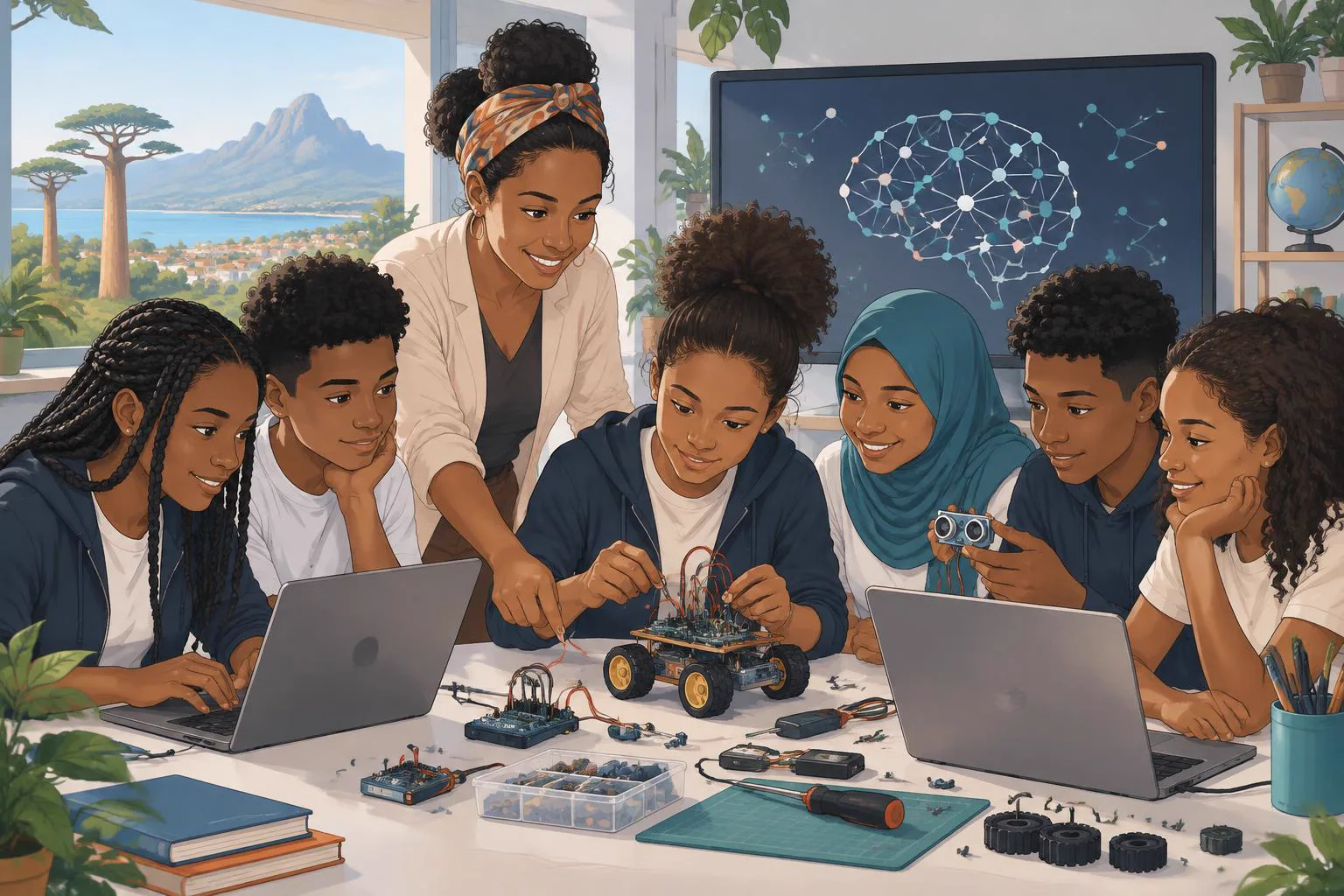
Weekly, hands-on clubs bring engaging learning directly into schools and community spaces for students of all backgrounds.
How it works
Each club begins by equipping the people who will lead it, then turns learning into a consistent, collaborative practice.
01
Before launching clubs, we invest heavily in human capital.
Capacity Building Workshops: Intensive training programs for local teachers, youth leaders, and tech enthusiasts.
Ready-to-Teach Toolkits: Structured, adaptable guides covering programming fundamentals, AI ethics and concepts, and hardware assembly.
Continuous Support: Mentorship networks where educators share best practices, solve technical challenges, and access new learning modules.
02
Once local mentors are ready, vibrant weekly clubs come to life in schools and community innovation hubs.
Hands-on Projects: Students build real projects—from simple scripts and coding games to smart-city models and autonomous robots.
Collaborative Problem-Solving: Project-based challenges foster teamwork, critical thinking, and creativity.
Inclusivity by Design: Girls and underrepresented youth are encouraged and supported to take leadership roles in technology.
Core disciplines
Teaching logical thinking, web basics, and software programming through interactive platforms and game development.
Introducing mechanical engineering, electronics, sensors, and hardware coding through practical assembly and robot automation.
Demystifying AI, machine learning basics, and data logic through age-appropriate, ethical, and creative projects.
Join the initiative
Whether you are an educator ready to grow, a school director enriching your curriculum, or a partner expanding access to technology education, we want to hear from you.